Recommendation
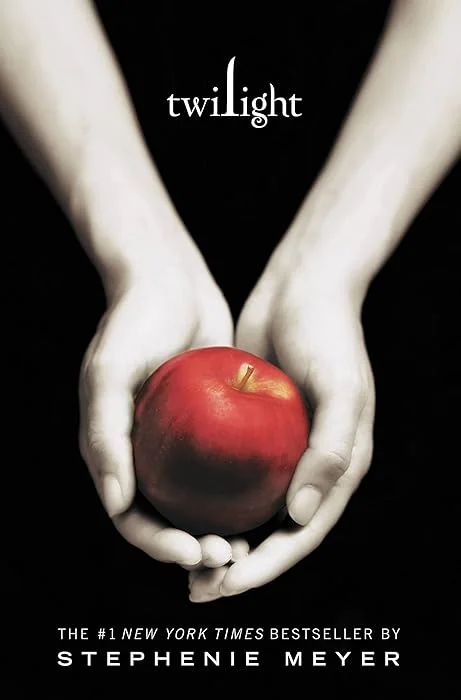
Stephenie Meyer’s Twilight is the first book of a four-part saga that became one of the publishing phenomena of the century. On its surface it is a simple story: a seventeen-year-old girl moves to a small, rainy town, meets a beautiful and aloof boy at her new school, and falls in love with him. The complication is that the boy, Edward Cullen, is a vampire, and the thing he wants most in the world is her blood. The novel is the story of two people trying to love each other across a divide that could kill one of them at any moment.
The book is for three kinds of reader. The reader who has seen the films, or heard the name for years, and wants to know what the original novel actually says. The young reader meeting a first all-consuming fictional romance, which is the audience the book was written for and conquered. And the parent, teacher, or older reader who wants to understand a story that shaped how a whole generation reads.
What makes the book worth opening is the engine underneath the romance. Meyer takes the oldest tension in any love story, the pull toward someone you are warned against, and makes it literal: every moment Edward spends close to Bella, he is resisting the urge to kill her. The writing is plain and fast, built to be read in long gulps, and millions of readers have described being unable to put it down. Treated on its own terms, Twilight is a study of desire, restraint, and the wish to hold on to something forever, told through a monster who is trying very hard not to be one.
Take-aways
-
The premise turns a love story into a survival story. Bella loves a being whose nature is to drink human blood, so the closer they get, the more danger she is in, and the romance runs on that constant, low hum of risk.
-
The town of Forks is almost a character. Meyer sets the book in the cloudiest place in the United States precisely because vampires who glitter in sunlight need a town where the sun rarely shines.
-
The Cullens are vampires who refuse to be predators. Edward’s family drinks only animal blood and call themselves “vegetarians,” a private joke for a life of permanent self-denial that keeps them from killing the people around them.
-
Edward is powerful, and Bella is the one mind he cannot read. He hears the thoughts of everyone except her, runs faster than a car, and is strong enough to stop one with his hand, yet her silence is what first draws and unsettles him.
-
The heart of the book is one line. “And so the lion fell in love with the lamb,” Edward says, naming both the tenderness and the threat in a single breath.
-
The danger becomes external when a hunter arrives. A passing vampire named James is a tracker who treats Bella as the most interesting game he has ever scented, and the love story turns into a chase across the country.
-
The story ends on a question, not an answer. Bella wants Edward to make her a vampire so they can be together forever; he refuses, unwilling to end her human life or, as he puts it, to damn her to an eternity of night. That unresolved wish is what carries readers into the next three books.
-
The book’s real engine is its first-person closeness. Everything reaches the reader through Bella’s plain, wry, self-doubting narration, which is what lets so many readers feel the story is happening to them rather than to a character on a page.
Summary
The novel is told entirely in Bella’s first-person voice, which is most of its appeal: the reader is locked inside the head of an ordinary, self-deprecating girl as something extraordinary happens to her. The plot moves in a clear line: she arrives, she falls in love, a threat appears, and she is rescued, with a short epilogue that opens the door to the rest of the saga.
A girl who moves to the rain
Isabella Swan, who goes by Bella, leaves sunny Phoenix to live with her father, Charlie, the police chief of Forks, Washington. She makes the move so that her young, restless mother, Renée, can travel with her new husband, Phil, a minor-league baseball player. Bella dislikes the rain and the gloom and expects to be invisible, but at the small high school she is instead a minor novelty, the chief’s daughter come home.
The opening also sets the family note that runs quietly under the romance. Bella cooks for her undomestic father and worries about her scattered mother from a distance, a girl used to taking care of the adults in her life. For a long stretch it is simply an ordinary teenager’s situation, the new school, the unfamiliar town, the awkwardness with a parent she barely lives with, and the novel takes its time there before anything strange arrives.
The family that keeps to itself
Bella settles in faster than she expected. A friendly boy named Mike Newton, a talkative girl named Jessica, and a kinder one named Angela fold her into ordinary high-school life, and it is against that ordinariness that the Cullens stand out. At lunch on her first day Bella notices five strikingly beautiful, pale students who sit together and eat nothing: the Cullens. They are the foster children of the young town doctor, Carlisle Cullen, and his wife Esme: Emmett, Rosalie, Alice, Jasper, and Edward.
Edward, seated next to Bella in biology, reacts to her with what looks like open hostility, gripping the edge of the desk and leaving as soon as the bell rings, then disappearing from school for days. When he returns he is, confusingly, kind. Then, in the school parking lot, a classmate’s van skids across the ice toward Bella, and Edward, who had been standing four cars away, is suddenly beside her, stopping the van with his hand and leaving a dent in the metal. He refuses to explain how he got to her or what she saw. Bella, drawn in and frightened in equal measure, begins to watch him as closely as he watches her.
Working out the secret
The clue comes on a beach at La Push, the nearby Quileute reservation, where a family friend’s son, Jacob Black, tells Bella his tribe’s old stories almost as a flirtation. The Quileute legends speak of “the cold ones,” beautiful blood-drinkers, and of a truce his ancestors once made with a particular clan of them who do not hunt humans. Bella connects the legend to Edward and begins to read everything she can find.
Her suspicion hardens on a trip to the town of Port Angeles, where she goes shopping with Jessica and Angela, wanders off alone, and is cornered by a group of menacing men. Edward appears out of nowhere in his car, pulls her in, and drives her to safety, shaking with a fury she does not understand until later: he had wanted to kill the men. Over dinner he calms down and tells her the first piece of his secret, that he can hear the thoughts of everyone around them, and that hers is the one mind he cannot read. Bella, instead of running, arrives at the full answer before he ever says the word.
The reveal is gentle rather than violent. Edward does not pounce; he confesses, and the rest of the book is about what two people do once a secret that large is in the open between them.
What the Cullens are
Edward tells Bella his history. Carlisle, the doctor, found him dying of the Spanish influenza in a hospital in the summer of 1918 and made him a vampire to save him, so Edward has been seventeen for almost a century. His family has chosen to drink only the blood of animals. It does not satisfy the thirst, Edward explains, comparing it to living on tofu and soy milk, but it keeps them strong enough to resist killing people. “I don’t want to be a monster,” he says.
Edward also carries a fear that gives the romance its weight. He calls himself a monster, and he refuses to make Bella into what he is, unwilling, in his words, to damn her to an eternity of night. His powers are considerable: he reads minds, though hers is the one he cannot hear, he moves and strikes faster than the eye, and his skin glitters in direct sunlight, which is the real reason his family hides from the sun. The others have gifts of their own. Alice, the small, quick sister Bella comes to love, can see flashes of the future, though the future shifts as people change their minds. What holds the Cullens together is not blood but choice: they are a made family, bound by a shared decision to live among humans without harming them, and Bella is slowly drawn inside that circle.
The lion and the lamb
The middle of the book is the courtship, and its tension is unusual: the danger is not that Edward will leave Bella but that he might lose control and kill her. He takes her to a hidden meadow, the one beautiful place he can be himself, and lies in the sun to show her what he really is. When she reaches out to touch him he has to pull away to keep himself in check, then comes back and lets her. “And so the lion fell in love with the lamb,” he tells her. Bella’s answer, that she is a stupid lamb and he a sick, masochistic lion, is the book’s way of admitting how strange the match is and choosing it anyway.
From there the relationship is openly acknowledged and almost entirely chaste, held back by the simple fact that he could break her without meaning to. Edward becomes constantly, watchfully protective, driving her, steadying her, fretting over how easily a human body bruises and bleeds. He brings her home to meet his family, who accept her with warmth, except for the wary Rosalie, and for a stretch the book is content to simply live inside a happy, impossible romance before the danger returns from outside it.
The hunt
The romance turns to thriller when Edward takes Bella to watch his family play baseball during a thunderstorm, the only time their strength is safe to unleash. Three wandering vampires arrive: Laurent, Victoria, and James. James is a tracker, a hunter who lives for the chase, and the scent of a human protected by a vampire clan is irresistible to him. He fixes on Bella as the game of his life.
To protect her, the Cullens scatter and send Bella to hide in Phoenix with Alice and Jasper. James outwits them. He lures Bella to the ballet studio where she trained as a child by making her believe he is holding her mother, then breaks her leg, throws her into the mirrored walls, and bites her hand. Edward arrives in time, his family destroys James, and Edward makes the hardest choice of the book: he sucks the venom from her wound to stop her from turning, even though stopping is, he says, nearly impossible once he has tasted her blood.
Twilight, not dawn
Bella wakes in a hospital with a broken leg, broken ribs, and a cover story that she fell down two flights of stairs. The book closes at the school prom, where Edward has brought her in a cast. She had hoped the occasion meant he was finally going to change her into a vampire so they could be together forever. He refuses. He calls it the twilight of her life, a life barely begun, and will not let her trade it away. She tells him she dreams only of being with him forever; he answers that he will simply stay with her, and asks if that is not enough. “Enough for now,” she says.
That standoff, between a girl who wants immortality and a boy who wants to protect her mortal life, is the unresolved heart of the saga, and it is what sends readers on to New Moon, Eclipse, and Breaking Dawn.
About the Author
Stephenie Meyer was an American mother of young children with no publishing experience when she woke one morning from a vivid dream and started writing it down that same day. By her own account she began on the second of June and finished the draft by the end of August, less than three months, often working with a child on her lap. Her sister Emily was the first person she let read it, and the one who pushed her to find an agent and try to publish. Twilight was released in 2005 by Little, Brown and Company and became an international bestseller, followed by New Moon, Eclipse, and Breaking Dawn, and then by a film series that carried the story around the world. Meyer has said she reread the manuscript dozens of times before sending it out, and that she cannot read a page of her own writing without changing five things.