Recommendation
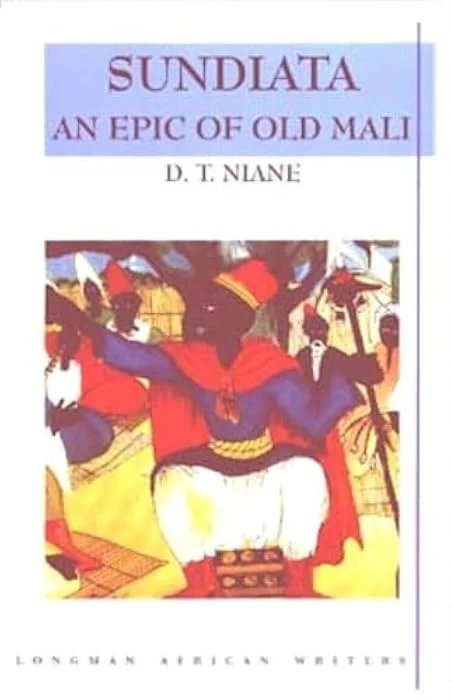
Sundiata: An Epic of Old Mali is the founding story of the Mali Empire as it has been carried for more than seven centuries by the djeli (griots) of the Mandingo people. The Guinean historian D.T. Niane published a French prose rendering of the epic in 1960; G.D. Pickett translated it into English in 1965 for the Longman African Writers Series. Niane was explicit about what he had done. He had not written a novel. He had spent years listening to the griot Djeli Mamoudou Kouyaté of Djeliba Koro village in Siguiri, Guinea, and a network of allied tradition-keepers across the Mandingo lands, and he had committed their oral text to paper. The book’s narrator, on every page, is Mamadou Kouyaté. Niane signs the preface as a translator.
The book is worth reading for three kinds of Ethiopian reader. The student or teacher of African history who has been taught the Atlantic-slave-trade narrative of West Africa but not its imperial inheritance, and who has never encountered Mansa Musa’s pilgrimage in its proper context as the late chapter of a story Sundiata began in 1235. The reader of the Kebra Nagast and the Ethiopian wisdom canon who will recognise instantly what Niane is doing, because the same operation, committing oral genealogical-historical tradition to written prose under a named transmission lineage, anchors Ethiopia’s own foundational text. And the diaspora reader who has been told that Africa had no history before colonial contact and is looking for the most efficient way to refute that claim from the inside.
What makes the book essential rather than merely interesting is the griot’s voice. Mamadou Kouyaté is not a quaint folkloric figure narrating an old story for an outside ear. He is a working professional historian operating inside an unbroken transmission chain that has out-lasted three colonial governments and continues to operate in the villages of Hamana, Siguiri, and Keyla as the reader picks up the book. He stipulates what he will tell and what he will conceal. He criticises the West for trusting written documents over speaking ones. He warns the reader, near the end, “Do not ever go into the dead cities to question the past, for the spirits never forgive.” The book reads as if a man from the thirteenth century were speaking, and is constructed to read that way.
Take-aways
- The book is an oral epic committed to prose, not a novel. Niane is its translator and editor; the narrator is Djeli Mamoudou Kouyaté of Djeliba Koro, who claims a transmission lineage from his father to his father’s father.
- The protagonist Sundiata Keita is a real historical figure who founded the Mali Empire after winning the Battle of Krina, traditionally dated to 1235. The empire he built lasted into the fifteenth century and at its height included most of the modern republics of Mali, Senegal, Guinea, Burkina Faso, Niger, and the Gambia.
- The plot is structured as a single hero’s-journey arc with five acts. Prophecy, birth and crippled childhood, exile and survival, return and victory, and the founding of an empire ratified by a great constitutional assembly at Kouroukan Fougan.
- The griot is the second hero of the book. Balla Fasséké, Sundiata’s appointed griot, is captured by Soumaoro Kanté and rescued at Krina; his role as historian, counsellor, and tutor to the king is presented as a calling on par with kingship itself.
- Soumaoro Kanté of Sosso is one of the great antagonists in African oral literature. A sorcerer-king whose throne sits on the skins of nine vanquished kings, who plays a balafon no other man may touch, and whose abduction of his nephew’s wife triggers the alliance that destroys him.
- The book preserves the constitution of the Mali Empire. At the assembly of Kouroukan Fougan, Sundiata’s empire is formally organised into clans, castes, and totemic relationships, with bards (griots) named to each lineage as official historians. This is treated as the founding political event, not the battle.
- The book reframes pre-colonial African political history. A reader who comes to it expecting myth finds a documented imperial constitution, a tax system, a justice system, market towns, salt and gold trade routes, and the cosmopolitan capital at Niani.
- Niane is open about what the griot will not tell. Some passages end mid-explanation because the tradition-keeper is bound by oath. The book’s silences are not gaps in Niane’s research; they are part of the form.
Summary
The text runs to about 100 pages in the English edition and is divided into twenty-one short chapters. The narrative is preceded by Niane’s preface explaining his method and by the griot’s own opening declaration. After the closing chapter, “Eternal Mali,” there is a long apparatus of notes by Niane and Pickett that any reader of the modern editions should not skip.
The griot’s frame and the first kings
Djeli Mamoudou Kouyaté opens the book by stating his credentials. He is of the Kouyaté lineage, traditional griots in service to the Keita princes of Mali for centuries. His knowledge comes from his father Djeli Kedian, who had it from his father, and he will deliver it without alteration. He warns that learning should be a secret and that the Kouyaté griots keep the keys to the twelve doors of Mali. He then sketches the dynasty: from Bilali Bounama, a Companion of the Prophet Muhammad whose son Lawalo left the Holy City and migrated west, down through the hunter-king Mamadi Kani who taught the bush sciences of medicine and game, down to Maghan Kon Fatta, Sundiata’s father.
The Buffalo Woman and the lion child
A hunter-soothsayer comes to Maghan Kon Fatta’s court at Nianiba and prophesies the arrival of two travellers and a hideous hunchbacked woman whom the king must marry. From her will be born the seventh and last conqueror of the world, mightier than Alexander. The two travellers arrive: hunter brothers Oulani and Oulamba Traoré, who explain that they have killed the supernatural buffalo of Do, a princess transformed into an animal in revenge for her family’s mistreatment. The buffalo’s dying wish was that her hunchbacked wraith, Sogolon Kedjou, be married to a worthy king. Maghan Kon Fatta marries Sogolon. After a long and difficult night involving sorcery, she conceives. The child is born at the moment a sudden storm breaks over the dry country, and is named Maghan Mari Djata. The griot calls him by his mother’s name in the Mandingo way: Sogolon Djata, contracted to Sundiata. The first wife, Sassouma Bérété, mother of the older Prince Dankaran Touman, sees her son’s inheritance threatened and begins plotting.
The crippled prince and his awakening
For seven years Sundiata is unable to walk. He crawls on the ground, takes food from cooking pots, and is mocked by Sassouma Bérété and the court. He is also, the griot is careful to record, a strange child: silent, watchful, taller and heavier than his peers, and visibly intelligent in ways that disturb the adults around him. Naré Maghan, his father, dies still uncertain whether the hunter-soothsayer’s prophecy was about this boy or about some son not yet born. The succession passes to Dankaran Touman, Sassouma Bérété’s son, by default. The mocking intensifies. Sogolon retreats with her three children into a small enclosure on the edge of the royal compound and survives the petty cruelties of her co-wife, who can now afford to be cruel openly.
The turning point comes when Sassouma refuses Sogolon a few baobab leaves from her own garden, returning instead to humiliate the exiled mother by demanding to know what sort of mother she is, raising a son who cannot even pluck leaves for her cooking. Sogolon, in front of Sundiata, weeps. Sundiata, watching his mother humiliated, calls for an iron rod from the smiths. The first rod is broken under his hand; he asks for the largest iron rod in the smithy. He plants it in the ground and pulls himself upright on it. The iron bends double under his hand and is later kept by the Keita lineage as a relic. He walks for the first time, asks his mother where she would like baobab leaves from, and uproots a baobab tree, carrying it on his shoulder back to the royal compound, where he plants it in front of his mother’s house. From that day, the griot says, the mocking ends. The court realises, too late, what they have raised in their midst.
The exile years
Sassouma Bérété, now genuinely afraid, sends nine of the great sorcerers of Mali against Sogolon’s son. They fail. She organises Sundiata’s removal through a different route: court intrigue and the slow poisoning of his name. To save her family, Sogolon takes her children, the daughters Kolonkan and Djamarou, and the youngest half-brother Manding Bory, into exile. The court griot of Naré Maghan, Gnankouman Doua, is by now an old man; his son Balla Fasséké is left behind in Mali, to be inherited along with the throne by whoever survives the coming succession. The exiles wander for years. They are sheltered briefly in several courts, including Djedeba and Tabon, where Sundiata at age twelve befriends the young prince Fran Kamara of the iron-gated mountain town. They pass through the dying Wagadou (the old Ghana empire) and finally settle at Mema, a wealthy kingdom east of the Niger ruled by Mansa Moussa Tounkara. The Mema king has no son. He raises Sundiata as his own. Sundiata grows into a powerful young man at Mema, becomes the king’s viceroy, leads Mema’s army in campaigns against the desert raiders, and is taught Arabic, the Quran, and the histories of Alexander the Great and the early caliphs. The griot uses these chapters to demonstrate Sundiata’s evolution from gluttonous crippled child into a hunter, a commander, a cosmopolitan political figure with the bearing of a king and the patience of a man who has waited.
Soumaoro Kanté and the search for the lost heir
While Sundiata grows up in exile, the king of Sosso, Soumaoro Kanté, is consolidating his hold over the Mandingo lands. He is a sorcerer-king whose throne sits on the skins of nine vanquished kings, whose chamber holds a sacred balafon no one else may touch, and whose body is so wrapped in fetishes that ordinary weapons cannot harm him. When his nephew the smith Fakoli Koroma’s wife Keleya is abducted by Soumaoro out of jealousy of her cooking, Fakoli renounces his uncle and joins the insurgency. Soumaoro retaliates by destroying Sundiata’s home city of Niani and razing it to ash. Dankaran Touman flees south and founds Kissidougou. With Mali leaderless, the elders consult soothsayers, who name the lost heir as the answer: “the man with two names.” A search party is organised. Following the soothsayers’ clues toward the east, they reach Mema’s market disguised as merchants selling baobab leaves and gnougou, the condiments of Mali, and Sundiata’s sister Kolonkan recognises the wares from her childhood garden.
The return and the battle of Krina
Sogolon dies at Mema. Sundiata pays for her burial plot with broken pottery and partridge feathers, a coded threat that he will reduce Mema to ruin if refused, and the king’s old Arab adviser decodes the symbols and grants the burial. Sundiata leaves with half of Mema’s army, gathers half of Wagadou’s cavalry, and rallies allies along the road south: Fran Kamara at Tabon, the smiths of Fakoli Koroma, the Wagadou cavalry. He wins first against Sosso Balla at Tabon, then against Soumaoro at Neguéboria. The decisive battle is at Krina in 1235. Sundiata’s griot Balla Fasséké, recovered from Soumaoro’s court along with Sundiata’s half-sister Nana Triban, has learned Soumaoro’s secret weakness. An arrow tipped with the spur of a white cockerel will void the sorcerer-king’s fetishes. Sundiata fires the arrow; Soumaoro is wounded and flees to the caves of Koulikoro, where he vanishes from the tradition. Sundiata captures Sosso and razes it to the ground. The griot, in a famous passage, foretells that no one will ever rebuild Sosso, that even the site will be lost to memory.
The empire and Kouroukan Fougan
After the war Sundiata calls the great assembly at Kouroukan Fougan, the field of justice, near Kangaba. Twelve thrones are set up. Every clan, kingdom, and lineage of the Mali confederation is given its rank, its caste obligations, its taboos, its banter-brotherhoods, and its hereditary griot. The Keita are kings; the Traoré are warriors and the kings’ “banter-brothers” of the Kondé; the Kouyaté are griots to the Keita; the smiths, leather-workers, weavers, and praise-singers receive their stations. The relationships of every Mandingo clan to every other are codified in a single recitation that the assembled griots commit to memory. Sundiata is given the title Mansa, Lord of Mali. The constitution that emerges from this assembly is preserved in the oral tradition and recited at the great gatherings of the Mandingo down to the twentieth century, when Niane heard portions of it from his teachers. Sundiata returns to Niani, rebuilds his ruined home city, and makes it the capital of an empire whose markets the griot lists by their specialties: salt at Niani, gold at Bouré, fish at Djenné, cloth from the Mecca road. The closing chapter, “Eternal Mali,” catalogues the towns and provinces, names the mountains and the rivers, names the kings who succeeded Sundiata, mentions Mansa Musa in passing as a later glory whose Mecca pilgrimage carried Mali’s name into the wider Muslim world, and instructs the reader not to attempt to dig into the secrets the griot has refused to disclose. Sundiata is buried near Niani at Balandougou. His successors carried the empire forward for more than two centuries. By the time European traders reached the West African coast in the fifteenth century, the empire he had founded was already older than most European nation-states are today.
About the Author
Djibril Tamsir Niane was a Guinean historian, playwright, and tradition-keeper born in Conakry in 1932. He studied history at Bordeaux, taught at the University of Conakry, and spent most of his career working between Guinea and Senegal as a scholar of Mandingo civilisation. He served as the editor of the UNESCO General History of Africa volume four, Africa from the Twelfth to the Sixteenth Century, which remains a standard reference work. He published more than a dozen books of history, drama, and oral-tradition translation. He died in Dakar in March 2021 at the age of 89, by which time he had become, for several generations of African students, the bridge between the village griot and the university library. The English translator, G.D. Pickett, was a British Africanist whose 1965 rendering of Niane’s French text for the Longman African Writers Series introduced the epic to anglophone readers; the edition is still in print, most recently as the 2023 Apollo Africa reissue from Head of Zeus. The original transmitter of the tradition, Djeli Mamoudou Kouyaté of Djeliba Koro village in Siguiri, Guinea, was a master of the Mandingo historical canon whose teachings shaped the entire post-colonial recovery of the Sundiata tradition. Niane in his preface dedicates the book to him.