Recommendation
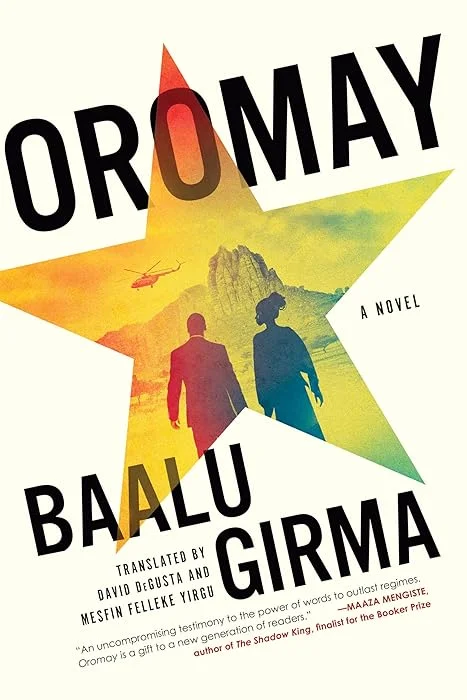
Oromay is the most famous Ethiopian novel of the twentieth century, written in 1983 by a man who almost certainly paid for it with his life. Baalu Girma was a top official in the Derg’s Ministry of Information, sent to Asmara in 1982 to help direct the Red Star Campaign, the regime’s three-month attempt to crush the Eritrean insurgency through a combined military, economic, and propaganda offensive. The campaign failed. Baalu came home, wrote the novel that documented why, published it in August 1983, watched the regime ban it within days and send soldiers into bookstores to seize copies, and was abducted on February 14, 1984. His body has never been found. The Soho Press 2025 translation by David DeGusta and Mesfin Felleke Yirgu is the first time American and British readers can read the novel in English, prepared with the support of the Baalu Girma Foundation and his three children.
The book is worth reading for three kinds of reader. The Ethiopian or Eritrean reader of the diaspora who grew up hearing their parents whisper about Oromay and never had access to it in their own language. The post-1991 reader for whom the Derg is history rather than memory, and who needs the texture of how the regime spoke and how its officials lived rather than another political account of what it did. And the reader who simply wants a thriller with a love story at its centre, set in a city, Asmara, that no other Ethiopian or African novel has rendered with such fidelity.
What Oromay gets right that almost no other novel of that era attempts is the inside view. The narrator is not a victim of the regime, not an insurgent, not a foreign correspondent. He is the regime, sent on the regime’s mission, and his honesty is the honesty of a man who has been allowed into the room where the decisions are made and who cannot un-see what he saw there.
Take-aways
- Asmara is the second protagonist of the novel. The city’s Italian inheritance, its bars and cinemas and Fiammetta-shaped love affairs, are written with the affection of someone who knew it and the foreboding of someone who knew what was coming.
- The narrator is a propagandist who knows he is writing lies. Tsegaye Hailemaryam files dispatches about a campaign he is privately convinced will not succeed, and the gap between the public and the private voice is where the novel breathes.
- Roman and Fiammetta are two futures, not two women. Roman, the Addis fiancée, is the highland Ethiopia the regime wants. Fiammetta, the Asmara editor, is the cosmopolitan Eritrea the regime is trying to swallow. Tsegaye chooses neither.
- The Chairman’s briefing is the closest portrait of the Derg’s interior life ever written. A long meeting scene in the middle of the novel renders the rhetoric, the silences, the performative applause, and the one military question the Chairman cannot quite answer.
- The whole campaign is a double agent’s game. Silay Berahi, the celebrated defector whose intelligence is supposedly the campaign’s key asset, is in fact running the Asmara assassination network from the Paradiso coffee house under the very nose of the security chief.
- The novel’s title is its prophecy. Oromay, the Tigrinya word for the end or it is finished, is the codename of the assassination operation, the closing word of every relationship in the novel, and the verdict the book passes on the regime that produced it.
- The author writes himself into the book as a meta-narrator. A second voice surfaces twice in the novel, in the preface and in the final pages, announcing itself as the author. Baalu Girma was killed soon after publication; the meta-voice reads now as a man arranging his own afterlife in advance.
- The propaganda machine cannot make truth out of failure. The campaign in Nakfa keeps grinding through the closing chapter while the narrator stands in a cemetery; the regime’s defeat in Eritrea is years away in 1983, but the novel can already hear it.
Summary
The novel is structured in five parts and thirty-five chapters, set across thirteen weeks from December 1981 through the spring of 1982. It belongs to the genre the Library of Congress labels romans à clef, thriller fiction with thinly-veiled real figures. Mengistu Haile Mariam appears as “the Chairman.” Several Red Star Campaign officials and Eritrean Liberation Front commanders are recognisable by their first names. The Italian Asmara, the war in Nakfa, the propaganda apparatus, and the Ministry of Information are documented in their actual operational shape because the author worked inside them.
Asmara in 1982: the city that walks Tsegaye into the book
Tsegaye Hailemaryam, journalist and Ministry of Information official, lands in Asmara at the end of December 1981. He has been told by his minister that he is being assigned to the Red Star Campaign for three months. He leaves behind Roman Hiletework, his fiancée in Addis Ababa, a high-strung woman with whom he is in love but to whom he has never been entirely faithful. Asmara is the Italian-built city Eritrea inherited at decolonisation: tree-lined avenues, espresso bars, cinemas with European posters, women in dresses that signal a sense of self the highland capital does not yet allow itself. The Red Star Campaign’s offices are spread across hotels and ministries that still carry their pre-revolution names. Officers eat at the Ciao Hotel and the Hamasien. Operatives meet at the Paradiso coffee house. The conscripts from Addis live in dormitories in buildings that were once Italian apartment blocks. The city’s geography is itself political: who lives where, who eats where, who is seen where, signals which version of Eritrea each character has chosen. The novel is in love with Asmara from the first chapter, and the love is a foreshadowing of how thoroughly the campaign will fail to convert the city into the regime’s image of it.
Tsegaye Hailemaryam and the propaganda machine
The narrator is a high-functioning insider, married to his work, fluent in the regime’s vocabulary, dependent on its protections, and quietly contemptuous of its self-deceptions. He drinks. He sleeps with women who are not Roman. He reads American books on guerrilla warfare in a country where the Chairman has just declared the era of guerrilla warfare over. He files copy he does not believe and signs his name to dispatches he privately doubts. He keeps an Italian phrase like vaffanculo on the inside of his teeth for moments when even his Amharic monologue cannot quite carry the weight of his disgust. His friendships, with the doctor Solomon Betregiorgis, with the editor Sileshi at the Ministry, with the military attachés he interviews, are real but always shadowed by the role each man is playing for the regime. The reader’s relationship to Tsegaye sits in this contradiction. He is honest with us, and he is dishonest with the regime he serves. Baalu Girma was building a portrait of himself, and the reader feels the cost of that self-portrait in every chapter that follows.
Roman and Fiammetta: the two futures
Roman, in Addis, is the engagement Tsegaye has made and the highland Ethiopia he has been raised to expect to inherit. She is loyal, intelligent, beautiful, and increasingly aware that the man she is engaged to is changing into someone she does not recognise. She works as a hostess at one of the Hilton’s restaurants, lives in the apartment she shares with Tsegaye, and carries the weight of being the woman who knows him best and is loved least. Fiammetta Gilay, in Asmara, is an editor at the campaign’s information bureau, a woman with an Italian first name and an Eritrean surname, the daughter of an Asmara family that has been split between the regime and the insurgency for a generation. She and Tsegaye meet in the early weeks of his assignment. The affair is slow, intelligent, mutually wary, and incrementally serious. They go to Italian restaurants in the old quarter, they walk along the road that climbs up out of the city toward Massawa, they argue about politics, they sleep together in her apartment in Mai Temenai. The reader recognises long before either character does that this affair is the political event of the novel. An official of the Red Star Campaign is sleeping with a woman whose family is split across the front lines, and the security apparatus on both sides eventually notices. Roman, when she discovers the affair, comes to Asmara to see it for herself. The confrontation between the two women at the funeral in the closing chapter is one of the most devastating short scenes in modern Amharic literature.
The Chairman’s briefing and the system it portrays
The set piece at the centre of the novel is a long meeting in which the Chairman of the Derg lays out the three resolutions that authorise the Red Star Campaign. The Chairman speaks with the unhesitating clarity of a man who has been right too often to imagine he is wrong now. He explains why the Eritrean insurgency must be eradicated, why the moment is favourable, and why the campaign will succeed. He invites questions. The room is silent. A thin man, his hands shaking, finally asks why this campaign, why now. The Chairman answers at length, recounting the regional context, the Sudanese instability, the Iran-Iraq war, the Camp David accords, the breaking up of the Shabia faction into rival groups. Tsegaye raises a quiet question about guerrilla tactics drawn from a book by Paret and Shy on the dynamics by which insurgencies transition between guerrilla and conventional warfare. The Chairman answers it sufficiently and Tsegaye nods. Colonel Wolday Tariku, the celebrated counter-insurgency commander, then delivers a long ethnographic analysis of the divisions inside the Shabia ranks: the highlander Hamassien, Serae, and Akeleguzai who think of themselves first by clan; the lowlander Semhar, Barka, and Afar; the political vacuum inside the insurgency leadership. Yeshitla Masresha, the regime’s chief ideologue, follows by criticising the Ministry of Information’s existing propaganda as too nationalist and not sufficiently class-analytical. The chapter is a working portrait of how authoritarian deliberation actually operates: not by threat but by the absence of permission to disagree, with applause arriving on cue, dissent metabolised as discomfort, and the only honest moments coming from the body, the shaking chin, the rumbling stomach, the quiet nod.
The double agent and the night the network falls
Silay Berahi is introduced as a celebrated defector, a former internal security chief of Shabia (the Eritrean People’s Liberation Front) who has surrendered to the campaign and whose intelligence is supposedly opening the regime’s first clear window into the insurgency. He is, in fact, the field commander of the Shabia assassination operation in Asmara, codename Oromay. From the Paradiso coffee house in the old Italian quarter he runs a network that is preparing to kill the top Red Star officials, with Ikuba Arat at Army Aviation and Gebray Tekeste in city administration as his lieutenants and dozens of small-cell operatives moving messages through the city’s bars and barber shops. Director Betru Tessema, the Red Star security chief, suspects Silay from early on. Rather than arresting him and losing the trail, Betru runs a slow-burning surveillance of the Paradiso for months, refusing the temptation to move on the visible cell until he can identify the leadership. The reader is not let into Betru’s confidence. The intelligence that closes the case arrives by accident: Fiammetta is forced by Silay’s agents to deliver Tsegaye to the airport at seven in the evening so they can kill him; she chooses instead to write him a letter naming Ikuba Arat by name and giving him the Paradiso address; she is shot before Tsegaye reaches her, but the letter reaches him. He runs to her house, she dies in his arms, and he carries the letter to Betru’s office. The arrests start at ten-forty that night. The Paradiso barista is taken first, gives up Gebray, Gebray gives up Ikuba and his two friends, the two friends confess to killing Fiammetta, and Silay is finally taken in the bar of the Ciao Hotel where he has been drinking with Red Star officials. Agent Teklay, whose younger brother Silay had ordered killed years earlier, is forbidden from extracting the personal revenge he wants. A cyanide capsule is found in Silay’s pocket. The underground compound below the Paradiso yields a list of more than five hundred Shabia operatives in Asmara, the names of dozens of officials targeted for assassination, and a second list whose discovery sets up an investigation that will extend into Addis Ababa and reach further up the regime than anyone in the room expects.
Fiammetta’s choice and the closing scene
Fiammetta makes the first decision of her life: to warn Tsegaye instead of betraying him. She is shot twice in the chest at her house in the Mai Temenai neighborhood and dies in his arms with the question will you remember me? still on her lips. Roman arrives in Asmara for the funeral, sees what Tsegaye’s heart now holds, takes off her engagement ring, drops it in the cemetery dust, and leaves. The mourners around the grave at Fiammetta’s funeral wear white in the Eritrean style; Roman wears black. The closing scene of the novel finds Tsegaye alone among the headstones, the engagement ring at his feet, the sun setting red over the Asmara highlands, and from the mountains beyond the city the sounds of the battle still raging at Nakfa. The campaign has lost its main asset, gained no ground in Eritrea, and produced no peace. He has lost both women. The narrator’s meta-voice surfaces one last time to observe that the protagonist has loved everything he could find and lost everything he loved, and then steps back. The final word of the novel is its title.
About the Author
Baalu Girma was born in 1939 and is widely regarded as the most important Amharic-language novelist of the twentieth century. He began his career as a journalist in the 1960s, reporting under Emperor Haile Selassie with a reputation for filing the facts without regard for how they would be received. After the 1974 revolution he became a senior official in the Derg’s Ministry of Information, eventually serving as Editor-in-Chief of the Ethiopian Herald and the Addis Zemen daily. He wrote five novels before Oromay, of which የቀይ ኮከብ ጥሪ (Call of the Red Star) and ሐዲስ are the best known. Oromay, his sixth novel, was published in August 1983 by Kuraz Publishing Agency in Addis Ababa. Within days the regime banned the book and sent soldiers into bookstores and markets to confiscate copies. On the night of February 14, 1984, Baalu Girma was abducted. He has not been seen since and his body has never been recovered. The Baalu Girma Foundation, established by his children, has documented what is known about his disappearance and made the first English translation, by David DeGusta and Mesfin Felleke Yirgu, possible in 2025.