Recommendation
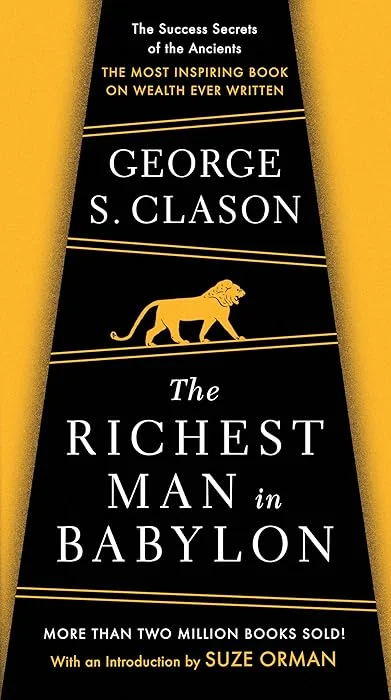
George Clason wrote The Richest Man in Babylon in 1926 as a series of pamphlets for American banks and insurance companies that wanted a memorable way to teach customers how to save. The pamphlets travelled. Employers handed them to workers, parents handed them to children, and the bound 1926 edition has never gone out of print. Three or four generations of readers have now learned to set aside ten percent of every paycheck from a book whose characters are camel traders, chariot builders, and gold lenders in a city that fell two and a half thousand years ago. Clason’s gift was to notice that the financial laws people most need are also the ones most easily forgotten, and that a parable is a stronger container for a forgettable truth than a chart.
The book is useful for three kinds of reader. The Addis Ababa or Mekele salary earner who looks at their bank balance at the end of each month and finds it identical to the bank balance at the beginning of the month, no matter how the raise went. The diaspora-remittance recipient whose monthly transfer from a relative in Saudi Arabia, the Gulf, or North America dissolves into household consumption rather than seeding a small business or a future income stream. And the young Ethiopian who has had nothing put away in their life and assumes wealth is for those who already have it, when in fact Clason’s argument is that wealth begins with the first ten coins.
What makes the book worth reading in 2026 is its compression. There are only nine ideas in it. Each one is wrapped in a story that takes ten or fifteen minutes to read. The whole framework fits on a single sheet of paper if you copy down the seven cures, the five laws, and the 70-20-10 debt plan. Read it once for the parables. Keep the sheet of paper.
Take-aways
- The seed law of wealth is one sentence. A part of all you earn is yours to keep, set aside before any other claim on your purse.
- Seven cures fatten a lean purse. Save a tenth, budget the rest, invest the savings, protect the principal, own your home, plan for old age, and keep increasing your earning skill.
- Five laws govern gold. Gold comes to the saver, labors for the wise investor, clings to the cautious, slips from the ignorant, and flees the man who chases impossible returns.
- Opportunity favors the man of action. Good luck is not random; it follows decision, and decision dies in procrastination.
- Safe lending requires either security, earning capacity, or both. Lending out of pity is throwing the money away twice, first to the borrower and second to the friendship.
- Debt is paid down through a fixed plan, not occasional gestures. Set aside twenty percent of every paycheck for creditors pro rata, live on seventy, and still keep ten for yourself.
- Owning a home reduces the cost of living and grounds the family. Even a borrowed home is wealth if the payments retire the loan instead of the landlord.
- Work itself is wealth’s first friend. The man who treats labor as an enemy will always be behind; the man who treats labor as a friend will always be moving forward.
Summary
The book is built as eleven loosely connected stories set in ancient Babylon, the city Clason calls the cradle of finance because of its commercial primacy in the Tigris-Euphrates valley around 2000 BCE. The narrator is sometimes Arkad, the wealthiest man in the city, sometimes one of his students, sometimes a camel trader or a former slave. The voice is deliberately archaic, full of thees and thous. The form is a hand-me-down of the wisdom literature found in Proverbs and the Ecclesiastes, books an Ethiopian Orthodox reader will already know. The substance is closer to a modern personal-finance handbook than the costume suggests.
The seed law
In the opening parable, Bansir, a chariot builder, sits on the wall of his unfinished workshop with an empty meal bag and no coins in his purse. His friend Kobbi, a musician, comes by equally empty. Together they realize that half a lifetime of hard work has produced nothing. They decide to ask Arkad, an old playmate who is now the richest man in Babylon, how he did it.
Arkad’s answer is a story of his youth. He worked as a scribe in the hall of records, carving cuneiform on clay tablets for low wages. One night he carved through until dawn for an old money lender named Algamish, who had promised two coppers if the work was done by sunrise. When the work was done, Arkad asked Algamish to teach him how to grow rich. Algamish, amused, gave a single sentence: “I found the road to wealth when I decided that a part of all I earned was mine to keep.” Not less than a tenth. Set aside before the garment-maker, the sandal-maker, or the priest could take their share. Arkad asked, “Is that all?” Algamish answered, “That was sufficient to change the heart of a sheep herder into the heart of a money lender.”
Arkad tried it. He took one coin out of every ten and hid it. The first year he invested his savings with a brickmaker who promised to bring back Phoenician jewels and instead came back with worthless glass. Algamish, returning, laughed: would you ask a breadmaker about the stars? You consulted a brickmaker about gems. The savings were lost, but the habit was kept. Arkad began again, this time investing through Aggar the shieldmaker, who paid rental each four months. The treasure grew. By the time Algamish was an old man, he made Arkad his partner.
The seven cures for a lean purse
The story shifts. King Sargon returns to Babylon after defeating the Elamites and finds his city impoverished. The royal chancellor explains: the gold of the public works has filtered into the hands of a few rich men, and the rest of Babylon has nothing. The king summons Arkad and asks if wealth can be taught. Arkad says yes. He proposes a class of one hundred men, each to learn the seven cures over seven days.
The first cure is to start the purse fattening: for every ten coins put in, take out only nine. The second is to control expenditures by listing every desire, separating necessities from wishes, and budgeting only enough for the necessities and the most important worthwhile pleasures. Arkad warns that what we call our necessary expenses will always grow to equal our income unless we protest in writing. The third is to make the gold multiply by investing it so each coin earns more coins, which then earn more themselves. The fourth is to guard the treasure from loss by demanding safety of principal before yield; consult those who handle gold for a living. The fifth is to make the dwelling a profitable investment by buying a home rather than paying perpetual rent to a landlord. The sixth is to insure a future income by setting aside provisions for old age and for the family if death comes early. The seventh is to increase the ability to earn by cultivating skill, paying debts promptly, caring for family, and behaving so as to deserve self-respect.
The five laws of gold
Arkad’s son Nomasir is sent into the world at the gate of manhood with a bag of gold and a clay tablet carved with five laws. He is told to return in ten years and give an account of himself. He loses the gold quickly to a pair of confidence men who lure him into a horse-race wager, then loses what little is left to a friend who talks him into a doomed shop venture. Bitter days follow. He sells his slaves, his robes, his horses. In poverty he remembers the tablet, reads it carefully for the first time, and learns each of the five laws by heart. He takes a job managing the construction of the city’s outer wall, saves a copper from his first earnings, joins a pool of investors who finance a metal caravan, abides by the laws, and emerges ten years later as a man of means.
The laws, in his father’s hand, are these. Gold comes gladly and in increasing quantity to any man who sets aside not less than a tenth of his earnings to create an estate for his future and his family. Gold labors diligently and contentedly for the wise owner who finds it profitable employment. Gold clings to the protection of the cautious owner who invests under the advice of men wise in its handling. Gold slips away from the man who invests it in businesses he does not understand or which are not approved by those skilled in its keep. Gold flees the man who would force it to impossible earnings or who follows the alluring advice of tricksters and schemers, or who trusts his own inexperience and romantic desires in investment.
The goddess of good luck
The setting changes. Arkad presides over a discussion at the Temple of Learning, where eighty men gather most evenings to debate questions of life and commerce. A cloth weaver opens the night by saying he has just found a purse of gold in the street and wishes to know how to attract more of such luck. The discussion turns to the gaming tables and the chariot races. Arkad observes, with the agreement of the crowd, that not a single substantial man in Babylon credits the gaming tables with the start of his success. Luck does not live there.
An elderly merchant proposes a different angle: what about the successes that almost happened? Each man in the room remembers an opportunity he let slip. A merchant remembers his father urging him to invest one-tenth of his earnings in a land-irrigation scheme that later proved enormously profitable; he hesitated and never bought in. A camel buyer remembers a midnight bargain on a flock of sheep he refused to pay for in the dark; the next morning, with the city under threat of siege, the same flock sold for triple. A Syrian visitor sums up the common element in his broken Babylonian: procrastinator. Each opportunity slipped because the man hesitated. The conclusion the room reaches together is that good luck is what follows opportunity, and opportunity rewards men of action.
Safe lending and the camel trader’s plan
The book turns to debt. Mathon, a Babylonian gold lender, hosts Rodan the spearmaker, who has just been given fifty pieces of gold by the king and is being pressed by his sister to lend it all to her husband for an untested merchant venture. Mathon teaches Rodan that a loan must serve the borrower’s actual ability to repay. He sorts borrowers into three classes by the kind of security they offer: those with property worth more than the loan, those with assured earning capacity, and those with neither. Loans to the third class will rarely come back. He warns Rodan against assuming his sister’s husband’s burdens out of obligation, using a fable of an ox and an ass who try to help each other and end up worse than before. The wise lender, like the wise borrower, demands a plan.
The book gives that plan in its longest sustained parable: the clay tablets of Dabasir the camel trader. Dabasir returns to Babylon from slavery in Syria, ashamed of his debts, determined to repay them. Under Mathon’s counsel he engraves a plan on five clay tablets. The plan has three parts. Ten percent of every earning is set aside as his own to keep. Seventy percent is used to pay for the family’s housing, clothes, and food, with a small portion for pleasure. Twenty percent is divided each full moon among his creditors, pro rata, according to the size of each debt. Some creditors curse him; one (Alkahad the house owner) threatens trouble. He pays them all anyway. Over two years the plan retires the debt completely, and Dabasir ends the cycle with savings in hand and the respect of the city restored. The book embeds a frame around this parable: a modern English archaeologist named Caldwell sends the clay tablets to a translator, who applies the same 70-20-10 plan to his own life in 1934 Nottingham and reports back that it worked there too.
The luckiest man in Babylon
The final story is told by Sharru Nada, an aged merchant prince, to Hadan Gula, the spendthrift grandson of his old partner. Sharru Nada was once a slave. As a young man, sold into bondage to settle his brother’s killing of another man, he was marched toward Babylon with a bronze chain on his neck, expecting to die hauling bricks on the city wall. The slave next to him in line was Megiddo, a farmer, who told him one truth on the road: “Work is the best friend I have ever known. It has brought me everything good I ever owned, my farm and my cows and my crops, everything.” On the other side was Zabado, a sheep thief, who scoffed that the smart play was to shirk and be sold to an easy household job. Sharru Nada watched both men carefully and decided that night to make work his friend rather than his enemy.
At the slave market the next morning he made himself loud and willing. When a fat baker walked along the wall asking if there was a baker among the new arrivals, Sharru Nada stepped forward and offered, untruthfully, that he was the perfect candidate. He persuaded the baker to take a chance on him. In the baker’s kitchen he learned to grind barley and bake the honey cakes that were the household’s main product. He volunteered for the heaviest tasks, learned the recipes faster than expected, and within months proposed to his master that he be allowed to sell honey cakes on the streets in the afternoons. The master agreed and they split the proceeds. Sharru Nada saved his portion, eventually bought his freedom, then bought into a partnership with Arad Gula (Hadan Gula’s grandfather), and over decades built a caravan trade that stretched from Damascus to Babylon. He tells Hadan Gula on the road that wealth is not in the rings on his fingers; it is in the way a man relates to the labor of his own days.
About the Author
George Samuel Clason was born in Louisiana, Missouri, in 1874 and lived until 1957. He served in the United States Army during the Spanish-American War, attended the University of Nebraska, and afterwards settled in Denver, Colorado, where he founded the Clason Map Company. The company produced the first road atlas of the United States and Canada. Clason’s interest in personal finance came not from academic economics but from publishing: in the early 1920s he wrote a series of pamphlets that banks and insurance companies could distribute to their customers to encourage thrift. The pamphlets featured parables set in ancient Babylon, narrated in archaic English to give the principles the weight of antiquity. The pamphlets sold so well that publishers bound them into a single volume in 1926 under the title The Richest Man in Babylon. The book has been continuously in print ever since and has been translated into more than thirty languages. Clason wrote little else and is remembered for this one work.