Recommendation
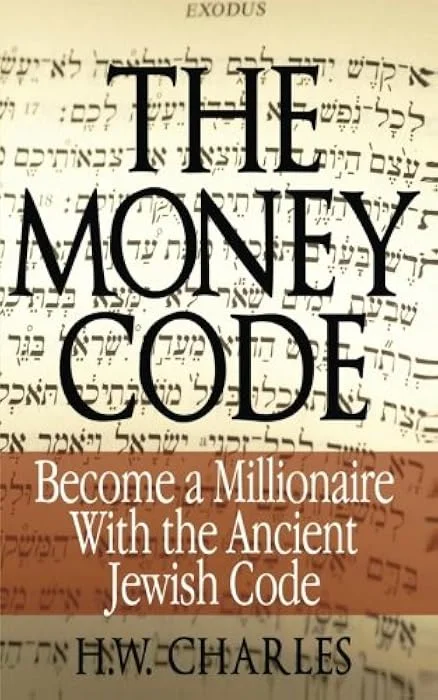
The Money Code is a short book, less than sixty pages, that argues seven principles drawn from Hebrew scriptures explain why Jewish communities have produced wealth across centuries. The seven principles are wisdom, tradition, work, investing, law, tithing, and charity. The book treats each principle as a “code” with a verse from the Tanakh as the original and a verse from the Talmud as the interpretation. The reader walks away with a clear, ordered system for thinking about money the way the Hebrew Bible thinks about money: learn first, work honestly, save, invest, follow the law, give back.
The book is strongest in the chapters on work, investing, tithing, and charity. The advice on diligence, on dividing one’s wealth into three parts, on giving ten percent before any other obligation, on building wealth so that one can give more rather than consume more, is durable, ancient, and practical. Charles writes in compressed paragraphs heavy with citations from the Tanakh, the Talmud, and the lives of wealthy historical figures. The structure is simple. The accumulation of references gives the seven principles the weight of three thousand years of practice.
The book is for any reader trying to build wealth slowly and seriously. It is especially valuable for readers who already hold a religious framework and want their financial life to fit inside it. Read it once in a single sitting. Take the seven principles, write them down, and return to the chapters when you are ready to put each one into practice.
Take-aways
- Wisdom comes first; wealth follows. Solomon asked for wisdom and was given wealth as well. The order matters.
- Wealth is a blessing, not a sin. Poverty causes more harm than money does. The problem is attachment, not the money itself.
- Build something. Do not be an employee for life. Work hard for a short period, then let what you have built work for you.
- Divide your wealth in three. A third in land, a third in business, a third ready to hand. Diversify further across instruments and currencies.
- Live below your means while you accumulate. Save aggressively, avoid credit-card debt, do not guarantee other people’s loans.
- Follow universal laws. Honesty in business, payment of fair wages on time, rest on the Sabbath, no usury, no greed. The laws are not arbitrary.
- Tithe. Give 10% of your income before any other obligation. The principle is older than any of us and has worked for those who have tested it.
- Give beyond the tithe. Charity is not a tax on wealth; it is the seed of wealth. The highest charity is the kind that makes the receiver self-reliant.
Summary
A note on how the book is built
Each of the seven chapters opens with a verse from the Tanakh (the Hebrew Bible), labeled “CODE”, and then a corresponding verse from the Talmud, labeled “DECODED.” The implication is that the Talmud, the rabbinic commentary on the Hebrew scriptures, contains hidden wealth instructions that ordinary readers have missed. This is a sales device more than a scholarly claim. The principles themselves are visible to any close reader of the Old Testament. There is no code. The framing gives the book momentum, and the structure is useful even when the conceit is overstated.
1. Wisdom
The book opens with Solomon, the wealthiest king in the Hebrew scriptures, who when offered anything by God asked only for “an understanding heart.” God gave him wisdom and also riches and honor he had not asked for. The lesson the author draws: pursue wisdom directly, and wealth will follow. Pursue wealth directly, and you may catch neither.
Wisdom in the book is defined as the practical application of knowledge, not the accumulation of facts. A wise person knows what to do with what they know. The author argues wisdom is gained through three habits: humility (you accept that you have more to learn), reading (Jewish tradition treats books as the highest household possession), and learning from everyone you encounter, regardless of their station.
A subtle point in this chapter is the suggestion to pray for wisdom rather than for wealth itself. For non-religious readers, the author offers “affirmative prayer,” a focused mental practice of holding a positive intention as if it were already realized. The practical content is close to what a modern self-help book would call visualization. The cultural roots are older.
2. Tradition
The second principle is less about money and more about inherited mindset. The author argues that Jewish families transmit a particular set of beliefs across generations: that wealth is a blessing from God, that poverty is an obstacle to good living, that children should be raised to value education and economic achievement, and that the body, the family, and the material world are good rather than fallen.
The chapter spends time correcting what the author treats as a common misreading of Christianity. The Greek philosophical inheritance, which treated the material world as flawed and the spiritual as pure, crept into Christian theology and produced a tradition that sometimes treated poverty as virtuous. The author argues this reading is incorrect. Jesus, he notes, did not teach against money itself. He taught against attachment to possessions. Judas managed the group’s finances. The miracle stories include the feeding of thousands, an act of material abundance.
The wider claim of the chapter is worth holding onto. The story you tell yourself about money shapes what you do with it. If you believe wealth is dirty, you will not pursue it. If you believe it is a tool, you will. Henry David Thoreau’s line ties the chapter together: “It is what a man thinks of himself that really determines his fate.”
3. Work
The chapter on work begins with a Talmudic question: what should a person do to become rich? The answer is direct. Engage much in business and deal honestly. The author then expands on what “engage in business” means in practice.
Most wealthy Jews, the book claims, are not employees. They are founders, investors, traders, real estate developers, product inventors. The work is to create something other people will pay for, then to hire craftsmen to build it, then to scale. Being an employee for life is, in the author’s framing, “forced labor.” This is harsh language. The underlying point is real. The compounding benefits of equity ownership over wage labor are well-documented in financial research, and the book is making that point in a blunt cultural register.
Other practical observations in this chapter hold up:
- Persistence through failure matters more than initial talent. Edison failed a thousand times. Most successful entrepreneurs have at least one bankruptcy behind them.
- Work in uninterrupted blocks. The book quotes Vilna Gaon, the 18th-century Jewish scholar, on the “boiling pot” metaphor: the first three hours and fifty-nine minutes heat the pot, the fourth hour brings the boil. Stop early and you start the heating again from zero.
- Choose work you can love and become skilled at. Skill plus love produces results that neither alone can.
- If you cannot found a company, choose a high-paying profession that requires real expertise (the book lists surgeons, lawyers, engineers, airline pilots, executives). Avoid careers chosen for prestige without compensation to match.
4. Investing
The investing chapter rests on a single line from the Talmud: divide one’s wealth into three parts. A third in land, a third in business or merchandise, and a third kept ready to hand. The principle is roughly 1,500 years old and is still the basis of every serious portfolio allocation theory.
The chapter then walks through specific instruments: stocks, preferred stocks, closed-end funds, annuities, American Depository Receipts, unit investment trusts, Treasury bills and bonds, corporate bonds, real estate, and REITs. The depth on each is shallow but the inventory is useful. The bigger argument comes through sociologist Lisa Keister’s research, cited several times in the book: Jewish families on average invest in financial assets earlier in life and at higher allocations to risk than other religious groups. Over a lifetime, this compounding difference accounts for a substantial share of the wealth gap Keister observed.
Other useful claims in this chapter:
- Live frugally during the accumulation phase. Proverbs: “Those who love pleasure become poor.”
- Avoid guaranteeing other people’s debts. Across the Hebrew Bible, this is one of the most repeated financial warnings. A modern reader can extend it to co-signing loans for family or friends.
- Diversify across many investments. Ecclesiastes literally says: “Divide what you have into seven parts, or even into eight.” The author reads this as ancient diversification advice. He is not wrong.
- Research before investing. Consult many advisors. Avoid trusting your own judgment alone.
- Once meaningful wealth has accumulated, diversify across countries and currencies. The modern read of the older principle that crises can come to any single nation.
5. Law
The fifth chapter is about following both natural laws (what the author calls the law of cause and effect, the law of action and reaction) and the moral laws written into the Torah. For non-Jewish readers, the chapter introduces the Noahide Laws, the seven universal commandments that, in Jewish tradition, apply to all humanity: acknowledge one God, do not blaspheme, do not murder, respect marriage, respect property, respect God’s creation, and maintain justice.
The chapter is strongest on business honesty. The Torah’s prohibitions on delayed wages, false weights, lending at interest within the community, and excessive markup are reframed as practical business principles. Honest businesses build trust. Trust compounds. Companies that cheat win short-term and lose long-term. The book quotes Proverbs: “Wealth gotten by worthless means dwindles away.”
A second thread is rest. Religious Jews are commanded to stop all work from sundown Friday to sundown Saturday. The author argues this discipline is itself a wealth practice. People who never rest cannot think clearly, cannot strategize, cannot innovate. Ronald Perelman, one of the wealthiest individuals in the world, is cited as observing the Sabbath strictly despite his vast business empire. The deeper point is that human beings are not machines, and constant work produces diminishing returns. A weekly stop is not laziness. It is maintenance.
6. Tithe
The shortest and most counterintuitive chapter is on tithing. The author claims that the practice of giving 10% of one’s income before any other obligation is the ancient formula for becoming wealthy. He is not arguing for a metaphor. He is arguing for a literal mathematical principle that compounds over time.
The biblical verse cited is unusual: the Talmud tells the reader to “test God” through tithing, the only situation in which testing God is permitted. The implication is bold. Give 10%, observe what happens, see whether the rest expands to cover what you have given away. John D. Rockefeller, possibly the wealthiest American in history, tithed from his first weekly salary of $1.50 and continued for the rest of his life. The author is not the only one to read Rockefeller’s tithing as a partial explanation for the compounding of his fortune.
The mechanics matter and the chapter is precise about them. Tithe means one-tenth, calculated on income, given after taxes but before other expenses. It can go to the poor, to those who study sacred texts, to religious institutions, to schools, to hospitals. It is a discipline of giving first, not last.
7. Charity
The final chapter expands beyond tithing into charity, which in the Jewish tradition is called tzedakah. The distinction matters. Tithe is a fixed 10%. Charity is anything beyond that. Many religious Jews give 20% to 30% over their lifetime.
The chapter’s most useful idea is the philosopher Maimonides’s eight levels of tzedakah, ranked from lowest to highest:
- Giving begrudgingly.
- Giving less than you should, but cheerfully.
- Giving after being asked.
- Giving before being asked.
- Giving when you do not know the recipient’s identity but they know yours.
- Giving when you know the recipient’s identity but they do not know yours.
- Giving when neither party knows the other’s identity.
- Enabling the recipient to become self-reliant.
The highest level is not about the size of the gift. It is about whether the gift removes the need for future gifts. The implication for development thinking, anti-poverty programs, and family generosity is significant. A loan that creates a business is higher charity than a daily handout that creates dependency.
The book closes with a story from the Talmud about a pious man whose charitable giving saved his life when his ship sank at sea. The moral the author draws is direct: charity is investment, and the return is not always monetary. The deeper claim, which the book delivers through Anne Frank: “No one has ever become poor by giving.” Whether one reads this religiously or psychologically, the practical effect on the giver’s character, and on the giver’s social network, is observable.
About the Author
H. W. Charles is the author of The Money Code (2012) and a small number of follow-up titles on Hebrew wisdom literature and personal wealth. The book was published with editor Monica Sannicolas and has sold widely in the popular finance category, particularly in markets where Hebrew Bible literacy is high. Public biographical information about the author is limited.