Recommendation
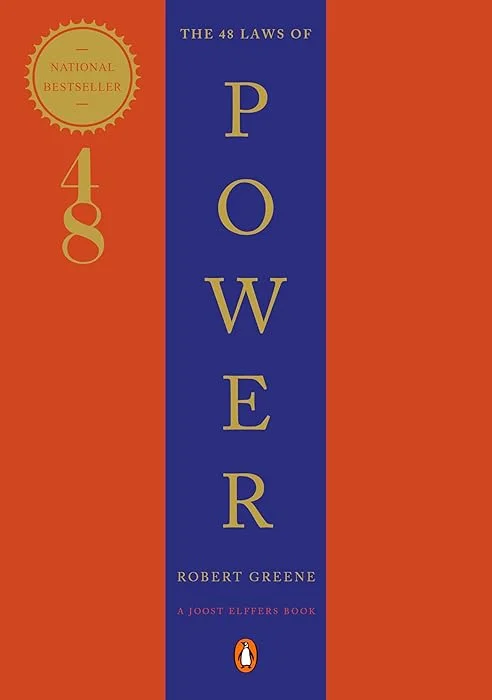
Robert Greene’s The 48 Laws of Power is a manual for getting, keeping, and defending power, assembled from three thousand years of history and presented without apology. Each of its forty-eight laws is a single, blunt command, Never Outshine the Master, Conceal Your Intentions, Crush Your Enemy Totally, and each is illustrated with stories of the people who obeyed the law and rose, and the people who broke it and fell. Greene’s argument is that power is a game with rules, that the rules have not changed since the age of kings, and that pretending not to play is itself the most common move of the cleverest players.
The book is for three kinds of reader. The reader who keeps hearing it quoted, by musicians, executives, athletes, and politicians, and wants to know what it actually says. The person navigating an office, a market, or any hierarchy who wants to understand the power games around them, whether to play them or simply to see them coming. And the reader of history who wants its hardest lessons about ambition, courts, and downfall gathered in one place.
What makes the book worth reading is its refusal to flatter the reader. Greene does not tell you power is nice, or that good intentions are rewarded. He treats power the way a physicist treats gravity, as a force that operates whether or not you approve of it, and he backs every claim with a story. This is also why the book is controversial: read as instructions, the laws are ruthless. Read as a description, they explain a great deal about why some people rise and others are quietly destroyed. The reader is left to decide which way to hold it.
Take-aways
-
The central idea is that the royal court never closed. Greene argues that modern offices, markets, and institutions run on the same indirect, face-saving power games as the courts of kings, where naked ambition was fatal and everything had to be done with a velvet glove.
-
Law 1 sets the tone: never outshine the master. Make those above you feel superior; brilliance that embarrasses a patron inspires fear, not gratitude, a lesson Greene draws from the finance minister who threw a party so dazzling it sent him to prison.
-
Several laws are about controlling what others see. Guard your reputation with your life, court attention at all cost, conceal your intentions, and always say less than necessary: power flows to those who manage appearances rather than blurt out the truth.
-
Several are about the initiative. Make other people come to you, get others to do the work but take the credit, and keep people dependent on you, so that you hold the cards and others wear themselves out reacting.
-
The hardest laws are about enemies. Crush your enemy totally, strike the shepherd and the sheep scatter, and pose as a friend but work as a spy: Greene insists that a feared rival left half-defeated will return for revenge.
-
The book is built from history, not theory. Every law is illustrated with real figures, Louis XIV, Talleyrand, Bismarck, Casanova, Kissinger, Galileo, and each chapter ends with a “Reversal” noting when the law does not apply.
-
Its most provocative claim is about the people who say they do not play. Greene argues that those who loudly renounce power games, or demand that everyone be treated identically, are often running the subtlest strategy of all, disguising manipulation as virtue.
-
The final law is to have no fixed form. Assume formlessness: keep no rigid plan an enemy can grasp, stay as fluid as water, and accept that nothing is certain and no arrangement lasts.
Summary
The book is organized as forty-eight short chapters, one per law. Each opens with the law as a flat command and a one-line judgment, then tells stories of the law being broken (a “Transgression”) and obeyed (an “Observance”), draws the lesson in an “Interpretation” and a section called the “Keys to Power,” closes with an “Authority” quotation from a historical voice, and finally adds a “Reversal” describing the cases where the opposite is wiser. It can be read straight through or opened at any law.
The court has never closed
Greene opens from a simple observation: the feeling of having no power over people and events is unbearable, so everyone wants more of it, yet today it is dangerous to seem to want it. We are expected to appear fair and decent, which means, he writes, that we must learn to be congenial yet cunning, democratic yet devious. His organizing image for this is the aristocratic court. Around every king, queen, or emperor formed a court of courtiers who had to serve the master while quietly outmaneuvering one another, and who could never be seen grabbing for power directly. Open ambition was punished; survival meant indirection, charm, and the dagger hidden behind a smile. Greene’s claim is that nothing has fundamentally changed. The modern world insists on appearing fair and democratic, but underneath, he writes, the same emotions of greed and envy still drive people, and the same court games decide who rises. He quotes Machiavelli, that a man who tries to be good at all times will come to ruin among the many who are not good, and Napoleon’s advice to keep an iron hand inside a velvet glove.
How each law is built
The structure is what makes the book usable. Take Law 1, Never Outshine the Master. Greene opens with a transgression: Nicolas Fouquet, finance minister to the young Louis XIV, threw a party at his chateau of Vaux-le-Vicomte so magnificent, with Moliere performing and fireworks over the gardens, that it made the king feel upstaged. The next day Fouquet was arrested by the king’s musketeer and spent his last twenty years in a mountain prison. Then comes an observance: Galileo, dependent on royal patrons, learned to present his discoveries as gifts that flattered his rulers rather than as achievements that upstaged them. The interpretation draws the rule, the Keys to Power generalize it, an Authority quotation hands the point to a historical voice, and the Reversal notes the rare moments when outshining is safe. Every one of the forty-eight follows this shape. The laws do not always agree with one another, and Greene means them not as a single system but as a set of tools, each fitted to a different situation, which is exactly what the closing Reversal of every chapter is there to admit. Those Reversals matter: they keep the book from hardening into dogma, conceding that absence can also be forgotten, that boldness can also destroy, and that judgment, not obedience, decides which law a moment calls for.
The laws of the mask
A large group of the laws are about controlling appearances. Reputation is the cornerstone of power and must be guarded with your life; you also learn to destroy rivals by opening holes in their reputations, then standing aside while public opinion finishes them off. Court attention at all cost, since what is unseen counts for nothing, and make yourself appear larger and more mysterious than the timid crowd. Conceal your intentions and always say less than necessary, because people who cannot read you cannot prepare a defense. Cultivate an air of unpredictability so that others wear themselves out trying to explain you, and use absence strategically, since too much circulation makes your value fall. Re-create yourself, acting like a king to be treated like one, and stage compelling spectacles that dazzle onlookers while the real work goes unnoticed. Never appear too perfect, though, since envy creates silent enemies and only gods and the dead seem flawless without punishment; and play to people’s fantasies rather than burdening them with unwelcome truths. Greene’s claim throughout is that power is social and visual before it is anything else, and that the person who manages the surface controls the game.
The laws of the upper hand
Another group is about seizing and keeping the initiative. Make other people come to you, so that they abandon their own plans and you set the terms. Get others to do the work but always take the credit. Learn to keep people dependent on you, since the more you are needed the freer you are. Win through your actions, never through argument, because a point won by argument breeds resentment that outlasts the win. Use selective honesty and generosity to disarm, since one sincere gesture can cover many calculated ones. When you need help, appeal to a person’s self-interest, never to their mercy or their memory of past favors. Play a sucker to catch a sucker, seeming dumber than your mark so he never suspects your motives. Control the options, offering people choices that all come out in your favor. And discover each person’s “thumbscrew,” the insecurity or hidden need that can be turned to your advantage. The thread is that the powerful person stays patient and lets others exhaust themselves reacting.
The laws of the long game
A third group concerns boldness, force, and endings. Enter action with boldness, since timidity is dangerous and hesitation infects everything you do. Concentrate your forces at their single strongest point rather than scattering them thinly across many. Master the art of timing; never seem to hurry, and strike only when the moment is ripe. Plan all the way to the end, since the ending is everything and the unprepared are overwhelmed by it. Crush your enemy totally, because a feared rival left half-beaten returns for revenge. And, in direct tension with that, do not go past the mark you aimed for: in victory, learn when to stop, since the moment of triumph is the moment arrogance makes new enemies. When you are the weaker party, Greene adds, do not fight for honor’s sake but use the surrender tactic to buy time. The book closes on Law 48, Assume Formlessness, the advice to keep no rigid shape an enemy can grasp, to stay as fluid as water, and to expect that everything changes.
Reading it straight
The book has been attacked as a handbook for manipulation, and Greene does not soften it. He states plainly that the laws describe how power has always worked, and that the people who claim to stand outside the game, who make a show of weakness or demand that everyone be treated exactly alike, are frequently the most cunning players of all, hiding strategy behind the appearance of virtue. He even turns the same lens on honesty itself, arguing that perfect, unguarded frankness inevitably wounds and offends, and that some measure of concealment is woven into all social life. He offers the laws as observation rather than encouragement, and he is blunt that power is a neutral skill the timid forfeit by default. In practice readers have used the book in two opposite ways: some to advance their own position, and many others simply to recognize the moves being run on them. The same manual works as a sword or a shield, and Greene leaves the choice to the reader.
A long line of teachers
Greene presents himself less as an inventor than as a compiler, and the cast he draws on returns again and again. There is Louis XIV and the court of Versailles he built to absorb his nobles; the diplomat Talleyrand, who served and survived every French regime from the monarchy through Napoleon to the restoration; the chancellor Bismarck, who knew exactly when to fight and when to wait; the seducer Casanova; the modern statesman Henry Kissinger; and the astronomer Galileo, carefully managing his royal patrons. Around them move swindlers, courtesans, generals, swindled kings, and forgotten ministers. Greene reaches back to Machiavelli and the military theorist Carl von Clausewitz and forward into the twentieth century, treating a Renaissance courtier and a modern executive as players of the same game. Each chapter’s “Authority” quotation hands the microphone to one of these voices, from Voltaire to the Sun King’s own courtiers, so that the book reads as a single distilled conversation about power running across three thousand years, with Greene as its editor.
About the Author
Robert Greene is an American author who became known for applying the hard lessons of history to modern life. The 48 Laws of Power, his first book, was published in 1998 and was developed with the book producer Joost Elffers; it grew into an international bestseller and a fixture of business, hip-hop, and self-improvement culture, quoted by rappers and executives alike. Greene read widely in history, philosophy, and literature before writing, and the book’s method, illustrating each principle with documented historical episodes and a closing counter-case, became his signature. He went on to write further books on related themes, including works on seduction, mastery, strategy, and human nature. The 48 Laws draws on a deep bibliography of classical and modern sources, from Machiavelli and Clausewitz to memoirs of courtiers and con artists.